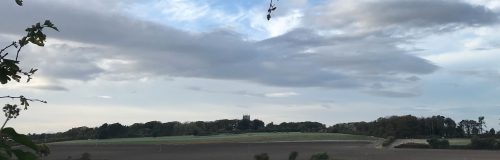
An Old House in the Fens
“A cloudy day or a little sunshine have as great an influence on many constitutions as the most recent blessings or misfortunes” — Joseph Addison (1672-1719)
“I suppose what I mean,” said Edmund, rather slowly — he was selecting his words carefully, conscious of the need, even with Silvia, to avoid blatant discourtesy — “is that the Fens don’t seem like your sort of place. There isn’t anything very enchanted about the Fens, is there?
“Maybe it’s to do with the flatness, or the straight lines, or all that industrialised, obviously hugely useful, but also totally charmless agriculture?
“Oh, you’re going to tell me, I expect, that there were all sorts of fascinating and extraordinary things that once happened here. And if there’s anyone who can take those long-ago things and weave them into something magical, it’s obviously you, not me. That’s why you’re the novelist, and I’m just a barrister!
“But even you have to admit, surely, that if there was ever anything magical about the Fens, all of that has totally gone now? It’s all just so — well, so ordinary. You know what I mean — everything that I saw on the drive up from London — that ugly new spill-over housing — ghastly Peterborough — the dead-straight roads — those huge boring fields, the flat horizon, the ditches —”
Realising, not before time, that his oratory was working itself free from grammatical coherence, Edmund wisely returned to his basic point.
“The Fens just don’t seem like your sort of place, somehow. You’re all about the romantic things — dreams, magic, poetry. You always have been! But if there were ever a landscape written in hopeless, charmless, utterly lumpen prose, surely that’s the Fens?”
Outside — and, to a lesser extent, inside too, because the old house was still very much a neglected, mistreated, rotting wreck — the rain streamed down, pouring off the huge, sagging Collyweston roof in erratic eddies, sending sharp shudders through the leaves of the beech trees beyond the tall crooked windows, pooling in what had once been the low part of the long, tangled garden, until it made for itself the start of a sodden little lake. It was dark out, too. Although the clock at the Abbey down the road had only just struck noon, the leaden sky made it seem far later.
Or was the house always like that? Was it always so dark in here?
“You’re very quiet at the moment,” prompted Edmund, after an interval. “Sorry, I hope you didn’t take that the wrong way. You know me — you can see right through me, you always could, so there’s no point not being honest with you. And I know you’ll make something amazing of this place, too.
“I just don’t understand what you see in the Fens! Heaven knows, there are plenty of other old houses in all sorts of places — the nice parts of Cornwall, the Sussex Downs, even the North Norfolk coast, as far as that goes — with plenty of history and character and all the rest. Surely you could have found something there instead?
“Yet here you are, in a dying market town surrounded by acres of ugly new-built sprawl, set out in the middle of nowhere, without so much as a hill or a coast within an hour’s drive. And what have you got by way of compensation? Piles of sugar-beet. Potatoes. Sewage works, and the odd light industrial unit. So many straight, weed-filled, probably foetid-smelling, mosquito-infested ditches!
“Oh, I’m sure you know what you’re doing. You always do. I just don’t see it yet. Help me. Help me, Silvia! What do you see in this place? Why, Silvia, are you here?”
Silvia, however, far from being offended, simply fixed her old friend with an apparently furious glare — which dissolved, after a few moments, into a warm smile, then a giggle, then a tinkling, tolerant, wholly affectionate laugh.
Silvia had known Edmund for more than four decades — since they were both children, in fact. He had always been like this. So had she. This was why they both found, so many years later, a kind of obscure and necessary comfort in these admittedly very occasional, still very welcome meetings.
No, there was no point in being cross at Edmund. Silvia uncurled herself from the rather battered plastic garden chair in which she was sitting, rose and, scooping up a cafetière from an inverted milk carton functioning as a table, shared out between Edmund and herself the last of the coffee. And then, at least, she spoke.
Read the rest of this entry »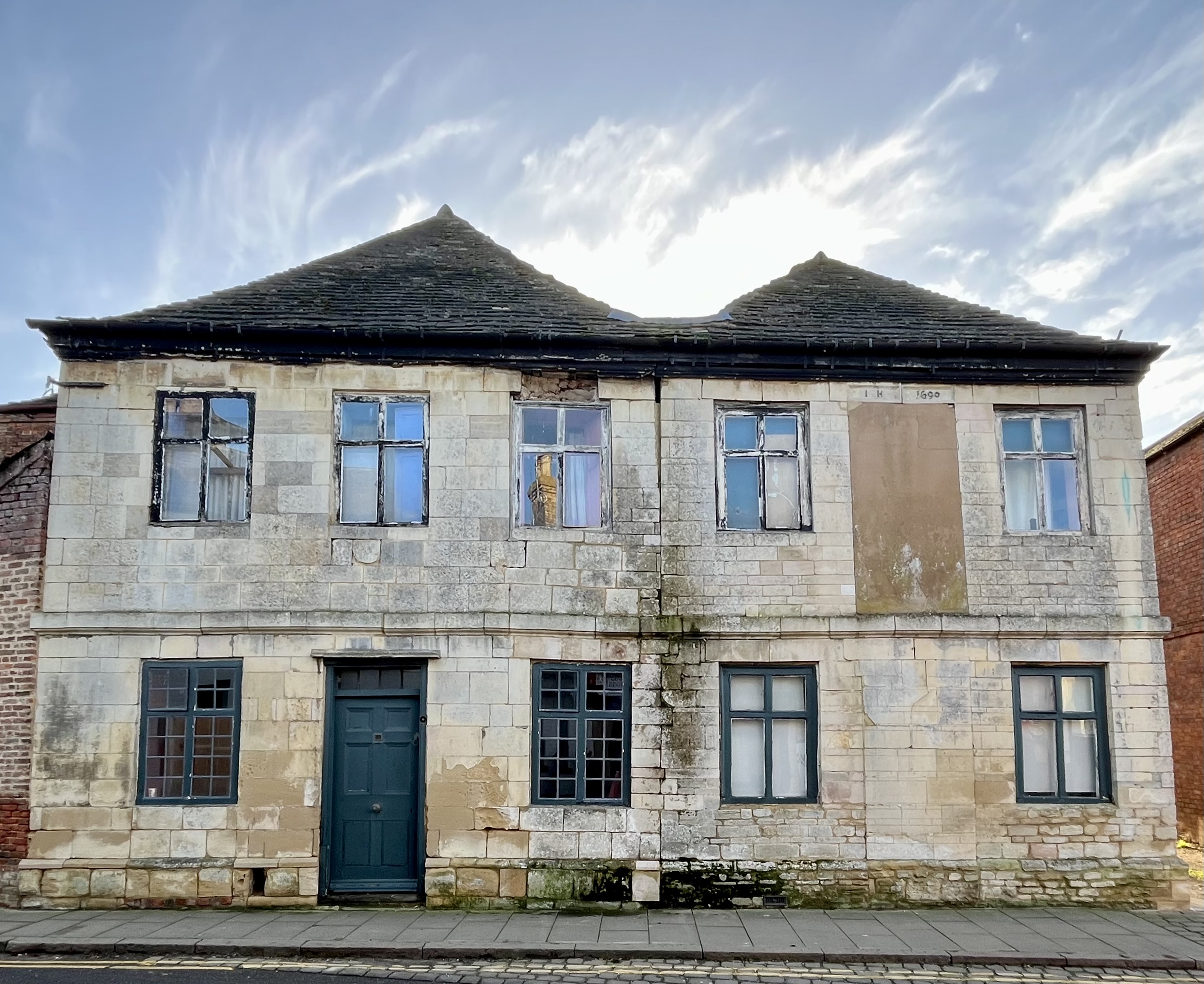

 News from Norfolk