News from Norfolk

Category: Uncategorized

The Lammas Ghosts: now available in print

For several years now, I’ve shared examples of my short fiction here on this website.

Today, though, sees the start of something new — the publication of The Lammas Ghosts, a collection of fifteen of my own original, Norfolk-based short stories in printed form. You can find out more here.

For me, ghost stories have, first and foremost, been a way of talking about two specific places — often, the North Norfolk coast, and later occasionally the Marshland area, just to the south and southwest of King’s Lynn. They’re what happens when history, topography, folklore and errant day-dreaming run up against the dry stuff of everyday life, fizzing over into uncanny narrative.

Sometimes, the stories give voice to the very real anxieties and frustrations of life in these places. At other points, I hope they evoke the beauty and magic of localities that have, even now, by no means lost their distinctiveness.

Mostly, though, they convey a real truth about East Anglia — that it’s a place where the past is always present, unfailingly ready to leap out and surprise us just when we least expect it — but perhaps also when we need it most.

You can order The Lammas Ghosts here.

Remembering Ralph Lowde

Between the years 1621 and 1639  the rector of Blakeney, a village on the north Norfolk coast, was a youngish yet very learned man named Ralph Lowde. As someone who now lives in the house once occupied by Ralph Lowde, I naturally wished to see what, if anything, four centuries on, I could discover about my predecessor. 

The most informative source for the early life of Ralph Lowde is the register of Gonville & Caius College, Cambridge. According to the register, Ralph was the son of Edmund Lowde, husbandman, of Aighton; he studied at Whalley School under Mr Browne; he matriculated at Emmanuel College in 1606 under Mr Walbanks, but migrated to Caius in October 1608 with William Branthwaite, Master. He took his BA in 1609/10, his MA in 1613, and the prestigious degree of BD in 1622. Finally, he served as a fellow of Caius from 1615 to 1622. 

What are we to make of this terse recitation of facts? 

Aighton is a hamlet in the parish of Mitton, five miles southwest of Clitheroe in the Ribble Valley. After the mid eighteenth century the area was to become notable as the location of the Jesuit foundation Stonyhurst College, but in the late sixteenth century it cannot have been more than a handful of modest buildings skirting the banks of a fast-flowing river.

To have started at Caius in 1608 at the age of 18, Ralph (sometimes Raphe or Radulphus) Lowde (sometimes Loud, Loude or Lowd) must have been born in about 1590. His father, Edmund, seems to have been a rather ordinary, middling sort of landowner. Dugdale’s Visitation of Lancashire (1664-5) would later record the family as being from Ridding, then Kirkham, and armigerous — the arms were argent, three bugle horns, sable, stringed, or — all of this presumably a play on the word ‘Loud’. But it was only during Ralph’s lifetime that the family entered the ranks of the gentry. 

Ralph spent four years studying at nearby Whalley Grammar School, a two-hour walk from his home. Before the reformation, the Cistercians at Whalley Abbey had offered educational opportunities for local boys. Afterwards, as early as the reign of Edward VI, a grammar school was founded — apparently in the upper room of a gatehouse formerly belonging to the abbey — to fill the gap. So when Ralph studied there, the school would have been at once rather old, yet also very obviously much changed over the previous generation or two. I have yet to find anything about ‘Mr Browne’, Loude’s schoolmaster. And if the school fit into the Whalley Abbey’s old gatehouse, it is hard to see how it could have educated more than a dozen or so pupils at any given time. But somehow in 1606, at the age of 16, Ralph was sent south to take up a place at Emmanuel College, Cambridge. 

The choice of Emmanuel College, at least, probably tells us something about Ralph’s education.

Read the rest of this entry »

A note on Sir Christopher Heydon and the Great Conjunction

Not much is left of one of my very favourite no-longer-extant neighbours, Sir Christopher Heydon of Baconsthorpe and Saxlingham in the county of Norfolk, who was born in 1561 and died at the start of 1623.

Heydon was the son and grandson of Norfolk landowners — the culmination of intermarried lines of ambitious lawyers and local political figures, in that sense not unlike the Townshends of Raynham or the Cokes of Holkham, except that in Sir Christopher’s case, the upward trajectory was due to receive a correction in the very near future.

Heydon studied first at Gresham’s School in Holt, and then at Peterhouse, Cambridge. As someone who lives in the Old Rectory, Blakeney, it’s quite striking to me that while Heydon matriculated at Peterhouse at Easter 1576, both James Calthorpe — another north Norfolk landowner and patron of the living at Blakeney — and James Poynter, soon to serve as the controversial incumbent at Blakeney and Wiveton 1584-1621 — matriculated at Cambridge (Trinity Hall and Corpus Christi, respectively) the year before, in Easter 1575. Cambridge wasn’t a big place then, so it’s hard to imagine these young men with their north Norfolk connections wouldn’t have known each other.

Heydon’s university education was presumably intended to equip him further to advance his family’s status in local and national politics, but for some reason, after he took his degree in 1578/9 at the age of 18, it’s reported that he ‘travelled widely on the continent’. Once he returned, he attempted a parliamentary career. It was not an immediate success. In 1586, he stood for the Norfolk county seat against another local gentleman and lost. His father Sir William Heydon, who must have been pretty influential at this point, somehow convinced the privy council to call a fresh poll, in which Heydon was duly elected. Unfortunately the House of Commons then embarked on a dispute with the privy council about its right to overturn electoral results, quashing the second poll result. In 1588, when there was another election, Heydon managed to win properly on the first try — but made little impact on the national scene, remaining more interested in travelling across continental Europe, where restless Englishmen could play out the era’s great doctrinal tensions in actual battlefield engagements. This seems to have suited Heydon, whose zeal for reformed religion was consistent throughout his life.

Read the rest of this entry »

Two Oaks, Kelling: the case for saving an ‘unremarkable’ interwar house

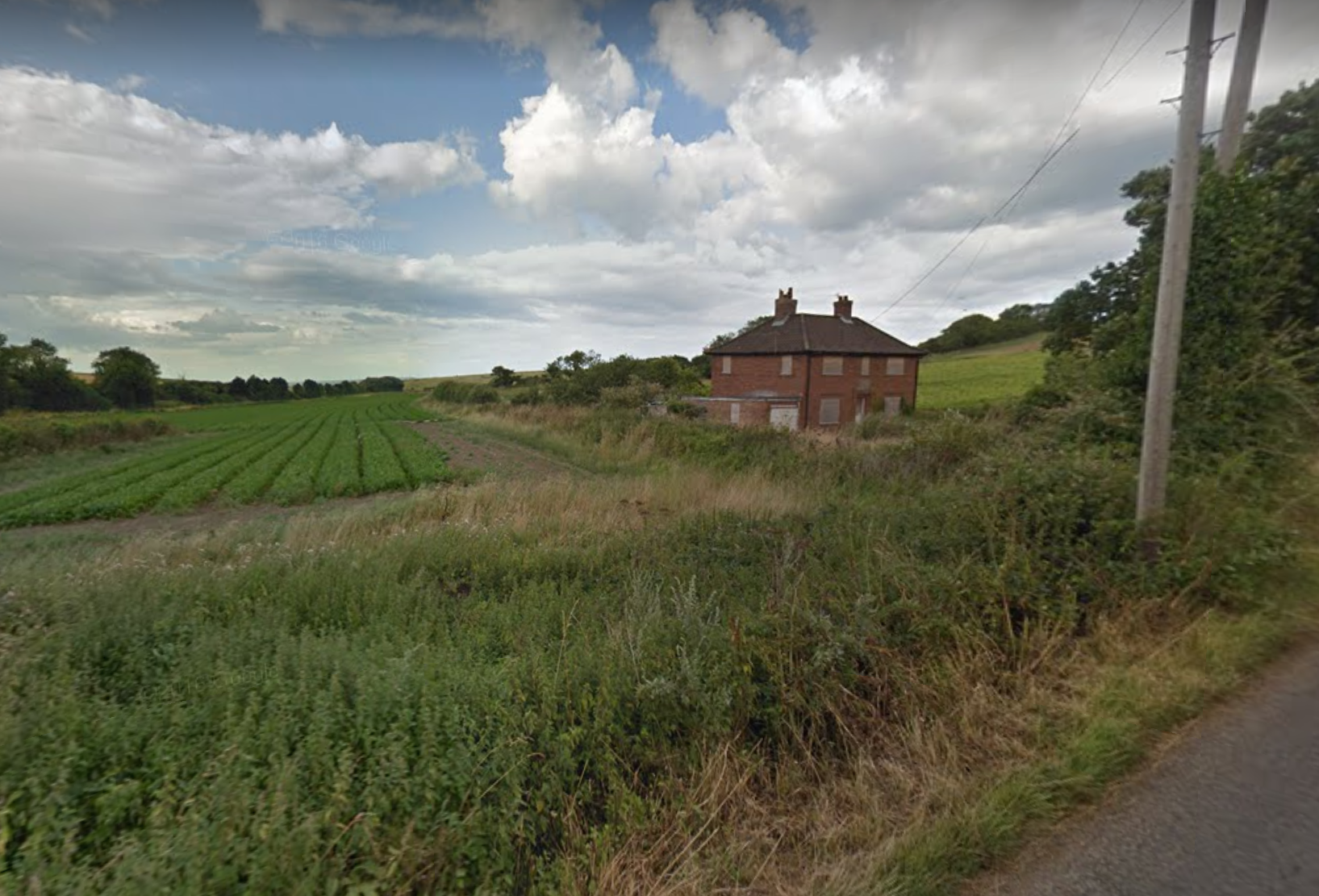
Two Oaks, Kelling

At present, the modest, interwar building shown above — Two Oaks, in the village of Kelling, Norfolk — is threatened with demolition. The planning application requesting demolition is here, on the website of North Norfolk District Council.

North Norfolk District Council has form for allowing the demolition of interwar buildings, including my own village’s New Rectory, an important early work from 1924 by local architect John Page.

I have, needless to say, sent a letter of objection to the NNDC’s Planning Committee, for their consideration, but in the interest of making the relevant case more widely, I reproduce my letter of objection below. (In the version below, I have also provided web links absent from the original document, as not all the enterprises mentioned, while presumably familiar to council members, will be known to the general public.)

___________

15 January 2020

To the Planning Committee of North Norfolk District Council

I write to object to PF/19/2071 — Demolition of detached dwelling and change of use of site to agricultural land.

Two Oaks, Kelling is an extremely attractive house, compact and pleasing in its simple symmetry. It is also richly evocative of the interwar period in which it was constructed, and of the wartime period which it survived intact. As such it should be preserved, renovated and cherished as an important part of the North Norfolk Coast’s built heritage.

North Norfolk sometimes makes much of its links with the Second World War. The Muckleburg Collection, established in 1988, is now visited by thousands each year. Langham Dome has received awards as a successful educational enterprise and tourist attraction. Private initiatives such as the successful Control Tower B&B in North Creake trade on nostalgia for interwar design as much as the desire to experience a site of wartime interest. North Norfolk Railway’s 1940s weekend goes from strength to strength — drawing thousands to the Holt/Sheringham area, offering everything from 1940s jazz to vintage vehicles, it is now one of the largest such events in the UK. At the other end of the spectrum, people from all over the world make private pilgrimages to visit the places where loved ones served, and sometimes died, amongst our Norfolk airfields and along our coast.

Yet those in charge of North Norfolk’s heritage can be casual to the point of negligence when it comes to preserving precious reminders of ‘the greatest generation’ and the world they inhabited. Astonishingly, seriously important 1920s and 1930s buildings — in good condition, often with their internal fixtures and fittings intact, sited prominently in their villages — are still demolished without question or comment.

This is not only grotesque on environmental grounds (the embodied carbon in these buildings means that their demolition is invariably far less ‘green’ than preservation and retrofitting would be) but also on historical ones. A building from the 1920s or 30s is clearly not ‘old’ in the sense that a building from the 1820s or 30s is — but if the younger building isn’t cherished and protected, then it will never have the chance to become old. In a century’s time, our descendants will scratch their heads and wonder why our generation did not fight harder to protect this part of their historical birthright.

Two Oaks may not be ‘remarkable’, in the sense that it is recognisably a normal interwar house, but it is certainly part of Kelling’s history. For some of its time it was apparently the village police house. And for many long decades, it has occupied a prominent position along the busy coast road. Its handsome silhouette is clearly visible, for instance, from Kelling’s War Memorial. And there is something poignant about this. How many troop carriers passed by this house? How many wartime aircraft overflew it? Did Churchill himself drive by on one of his various visits to the area? To anyone who knows or cares about 20th century buildings and happens to drive past Two Oaks today, all these questions are very pertinent. And they may matter even more to those passing by in 100 years, or in 500 years’ time.

There is, after all, a great deal more to North Norfolk’s history than the lazy cliché of flint-built, pantile-roofed fishermen’s cottages. At some level, local government takes account of this. The parish summary for Kelling on the ‘North Norfolk Heritage Explorer’ website expends two long paragraphs on still-extant wartime defensive structures and other built legacies of the Second World War including pillboxes, gun emplacements and anti-aircraft batteries. Increasingly, however, the public understands the history of that war not only through its explicitly military heritage, but also through reminders of the Home Front, civilian experience that underpinned and enabled it.

Two Oaks is very much a part of that Home Front history. In its modest way, it is a monument to Kelling’s wartime experience, and a reminder of that pivotal moment in our region’s history. To demolish Two Oaks is to show contempt, yet again, for the vanishing past, no less significant for being relatively recent.

Please insist on the preservation of Two Oaks, and please reject this planning application.

[Signed etc.]
On Brexit

Let me preface what will necessarily be a personal, subjective yet sustained pre-Brexit lament with a slightly alarming confession.

In 2001, I worked for several months on Iain Duncan Smith’s leadership campaign, and then for a few more months in the Leader’s Office at CCO. As a lifelong Tory who voted ‘Remain’ and who parted company with the party in September 2016, part way through Theresa May’s ‘citizen of the world’ speech, I now heartily regret this brief chapter of my life, realise it constituted monumentally bad judgement on my part, and wish it had never happened. Sorry, everyone.

My reason for reminding the world of this embarrassing interlude, however, has less to do with some random masochistic-exhibitionist personal quirk than it does with insisting on a more general historical point regarding Britain’s rupture with the European Union, which Theresa May has announced that she will trigger tomorrow.

Here it is: in 2001, even a famously Eurosceptic, ‘right wing’ campaign conducted first within the parliamentary Conservative Party, then within its grassroots, did not envision prying the UK out of the EU. It did not envision hard Brexit. In its darkest, weirdest, most extreme moments, it did not even begin to imagine the sort of enormity that Ms May will perpetrate on Wednesday. Read the rest of this entry »

On burying Martin McGuinness

There’s a nice irony — ‘nice’, that is, in the older sense of the word — in the fact that the day of Martin McGuinness’ burial is being marked in London with blue flashing lights, bridges closed off with police tape, helicopters circling low overhead and tributes to a brave police constable, murdered while carrying out his job. At least for people of a certain age, it is these things, more than Tuesday morning’s fulsome farewells to a dead peace-maker, that conjure up the man.

McGuinness’ IRA was responsible for killing far more Londoners, far more police constables, far more UK residents and visitors than Islamist terrorists have ever done. Read the rest of this entry »

On James Graham’s ‘This House’

Whatever dark hints 2016 may have provided to the contrary, conventional wisdom isn’t always wrong. Having seen James Graham’s This House at the Garrick Theatre last night, I can confirm what more or less every professional or casual critic, UK politics geek, old Labour hack, veteran theatre-goer, friend or sundry acquaintance will already have told you, which is that This House is a hugely compelling, satisfying play, and that James Graham’s is a voice to be welcomed with unalloyed enthusiasm.

This is all the more remarkable when one considers the play’s apparent modesty of aspiration. This House takes place not on the floor of the House of Commons, that great expansive theatre of parliamentary democracy with its larger-than-life characters and set-piece battles, but rather in what it describes as the ‘engine room’ of the House of Commons — the offices of the government and opposition whips, hidden down in the badly-maintained bowels of the building, wherein much of the real business of politics is carried out by figures who, at least as far as the general public is concerned, are all but nameless and faceless. Its timespan stretches from the February 1974 general election to the 1979 vote of no confidence that brought down Jim Callaghan and ushered in the age of Margaret Thatcher. During these not-quite-five years, the Labour Party struggled to govern with an unfeasibly small, fragile, continually embattled majority. How the Labour whips made this happen — and at what cost — is the central focus of This House.

Modesty? Imagine, perhaps, trying to sell to a West End Theatre the idea that procedural wrangles mostly carried out by men in suits in sparsely-furnished basement rooms during the late 1970s are actually really, really interesting. Or to put it another way, think of what might have happened if Shakespeare, having decided for whatever reason to cut from Henry V not only the king himself but also all the higher nobility, made the whole play centre on Pistol, the captains and the Boy, always speaking in prose, with the battles invariably taking place off-stage, hence seen only through their impact on logistics.

This, more or less, is the challenge that Graham has set himself. That he succeeds so brilliantly is surprising enough that, two day later, I can’t entirely resist the temptation to try to pick apart his achievement, and see how he managed to do it. Why does everyone, correctly, love This House so much?

Perhaps the most surprising aspect of this slyly surprising play reposes in its manifest, unabashed and deeply unfashionable lack of cynicism.

Read the rest of this entry »

On gardening badly

Far and away the most successful thing in my garden is the deer population.

We have at least two types of deer — sturdy little muntjac, rapacious in their strangely shy, apologetic way, plus a tiny herd of roe deer, whose defence strategy when confronted by a human is to flash a pale bottom  in the hope that this spectacle will somehow be so terrifying as to drive all foes away. I suppose we ought to prefer the roe, as they are natives, but the diminutive exoticism of the muntjac, like labrador retrievers with cloven hooves, is not without appeal.

Whatever anyone may tell you to the contrary, deer are fussy eaters.

Consider the roses. Read the rest of this entry »

Norfolk

Here’s a question. What’s the flattest county in England?

Norfolk, you might well answer — but you’d be wrong. The answer is, of course, Cambridgeshire.

What’s the second flattest county in England?

Norfolk, you might answer — but again, you’d be wrong. The answer is Lincolnshire, although before 1974, the answer would have been Huntingdonshire — followed by Lincolnshire.

Norfolk, in other words, isn’t as flat as all that. Nor does Norfolk offer much in the way of fens. Fens, in general, are a Cambridgeshire thing. Norfolk does have some fens — but then it also has some coastal cliff formations, at Hunstanton, Sheringham, Cromer and so forth. It has a lot of coastline, but in places it is not particularly close to the sea. It has rivers, obviously, but in recent years, it has had far fewer serious problems with flooding than some counties one might mention. And if there are no mountains in Norfolk, how many English counties can claim anything approaching a mountain? Unless I’m missing something here, post-1974, only Cumbria has mountains — and not many of those, either.

In short, there is nothing particularly astonishing about the altitude of Norfolk relative to the rest of England. Or to put it another way, Norfolk really isn’t very flat, whatever Noel Coward’s not-very-reliable heroine in Private Lives might have claimed to the contrary.

Yet the canard persists. Read the rest of this entry »

On native and non-native bluebells

Earlier this week, I did something very stupid, if very human, which I now regret. I posted a photo of some flowers on Twitter.

They were blue, pink and white flowers, growing up a bank, interspersed with cow parsley. The reason I shot the photo, and later posted it, is that I thought the flowers were rather good. They are, in effect, the view from our west-facing bathroom window right now, following on from earlier snowdrops and aconite. The bank, under an old beech tree, tends to be dark. Framed against its grave shade, the flowers looked delicate, cheerful, happy. Surely no one could object to a photo of happy flowers?

Not for the first time, however, I had underestimated Twitter. Within 48 hours, someone I don’t even know — a follower of a follower — launched an attack. How dare I post a photo of non-native bluebells?

For such the flowers were, and indeed are. Well, I knew that our blue, pink and white flowers were Spanish bluebells, not native ones. I’d never claimed anything to the contrary. Soon, however, I was being furnished with links to websites — there are plenty of them out there — decrying Spanish bluebells. Apparently Spanish bluebells, characterised as ‘coarse’ and ‘scentless’, come over here, pollinating our innocent native Hyacinthoides non-scripta, crowding our bluebell woods with horrid half-caste bluebells. Read the rest of this entry »

On open fires

An old jazz standard — the recording I know attributes it to W. C. Handy — starts with these lines:

Love, oh love, oh loveless love
You’ve set out hearts on goal-less goals,
From milk-less milk, to silk-less silk
We are growing used to soul-less souls.

I’m reminded of this song every time I sense the warm, scentless, practical yet uncharismatic presence of a wood burning stove. Fire-less fires, eh? Where’s the fun in that?

At one level, of course, one can see the point. The arguments in favour of wood burners are well rehearsed to the point of exhaustion by now. The best amongst these is fuel efficiency. Open fires, apparently, send 70 percent of heat up the chimney. Even here, though, the fire-lover in me chips in: ‘Really? Doesn’t that rather depend on the type of fuel and fire, the shape of the fireplace, the presence or absence of an iron fire-back?’ Let us accept the statistic. Where heating and fuel costs are the main points, to the exclusion of anything else, then wood burning stoves make sense.

Infinitely more revealing, however, are the objections based on, if you like, the fire-ness of actual fires. Read the rest of this entry »

On darkness

The first thing to understand is that the Old Rectory is not, by any stretch of the imagination, a ‘light’ house.

In the beginning one might have blamed the darkness on the Old Rectory’s state of repair. When we first went to look at it, on that blustery spring morning, we were forced to borrow the estate agent’s wind-up torch to get as far as the first leaf-strewn kitchen corridor. The electricity had failed — years ago in the kitchen, perhaps decades before in some of the more far-flung rooms — whilst the water running down walls and standing in dank, black puddles on the floor suggested it might not be back any time soon. Here and there, damp wintry light found its way in through dirty leaded windows in an apologetic way, like a half-hearted tresspasser. It never got very far.

Later on, however, once we had installed all-new electric wiring, cleaned the glass and done much more besides, some of which will be described here, this line of argument was exposed as unsustainable. Read the rest of this entry »

On white

Colour is out of fashion at the moment, as happens from time to time. White is back.

Even people who could not really explain the difference between colour and tone — even people who don’t realise that tone is actually just colour, but thinned down with varying amounts of grey, the variation in the amount being the point — would, at the moment, probably prefer a cool, Gustavian space, full of massive pieces of Edwardian brown furniture arbitrarily slathered in Farrow & Ball All White, to the same space furnished with the un-modernised brown furniture and dressed with deep colours such as emerald, azure or Farrow & Ball’s own Picture Room Red.

Why this is the case is a question for those who enjoying staring thoughtfully into the shifting deep currents of mainstream taste. There have been points — perhaps most recently in the 1980s — when colour ruled. There have also been other points — the 1970s, the 1990s — when cool white interiors, enlivened with the most subtle of tonal interventions — were far more acceptable. Perhaps this iteration suggests that change itself is what we seek, the freshness of transformation and renewal, the occasional decorative climacteric?

For the moment, though, colour is out. Read the rest of this entry »

On bathrooms

Browsing through estate agents’ particulars, there is no surer way of working out whether an old house has been ‘done up’ than by comparing the number of bathrooms with the number of bedrooms. The higher the ratio, the more radical — ‘brutal’ might be a better word — the renovation.

For a very long time in England, the vast majority of houses got by without any bathrooms at all. A jug of warm water and a basin, coupled with a chamber-pot and perhaps an outside privy, ensured that all the relevant biological and social needs were fully met.

Then something happened. Bathrooms appeared, their technology was gradually refined and they began to work their way down the social and economic scale, until it became vanishingly rare to find a living space without some sort of functioning bathroom.

As rooms go, bathrooms are, however, fairly modern. Read the rest of this entry »

Old Rectors

Our house is an old rectory, which means that for hundreds of years, the people living here were clergymen, their families, colleagues and servants.

Often I think of them, trying to imagine them living in what are now our rooms. First, perhaps, came tonsured priests, presented by a Praemonstratensian house in the Norfolk Broads. I know little of them except a few names, some of which raise questions. For instance, was Henry Curson (1395) the man who shows up elsewhere, as rector of another nearby village, taking the leading role in a local affray, heading up a gang of armed men? If so, he sounds distinctly un-meek. Read the rest of this entry »

On bedrooms

Of all the books that have ever been published on English home decoration — I mean the ordinary everyday sort, not monographs on Inigo Jones’ schemes for Wilton House — the greatest is the not-quite-a-series published in the 1980s including ‘The Englishman’s Room’, ‘The Englishwoman’s House’ and, not least, ‘The Englishwoman’s Bedroom’.

The genius of this latter book lies in the realisation that, while bedrooms usually have something to do with privacy and sleep, these are really the only limitations on their diversity. And so begins a magical mystery tour round social and sexual mores, wealth, class and perhaps most of all, personal taste. The greatest joy of the tour is the way in which the woman depicted in ‘The Englishwoman’s Bedroom’, through their starkly-differing decorative choices and explanations thereof, provide remarkably frank, revealing if not always entirely conscious autobiographical profiles.

‘Ralph and I both like playing, and this is our set’ proclaims Hammer Horror actress Virginia Wetherell coquettishly. ‘The atmosphere is sensual and warm.’ And indeed, the room depicted is a cluttered, crepuscular, airless ‘love nest’ festooned with Victorian lace, curled ribbons, artificial flowers, fringes, frills, an infinity of pointless little cushions, and a fireplace filled with dusty gypsophila. ‘I feel that the bedroom serves three basic purposes: to sleep in, to make love in, and to be ill in.’ Well, quite. Read the rest of this entry »

On kitchens

Something strange has happened to British kitchens over the past generation or so — they have, apparently, become ‘the heart of the home’.

This is a departure. Of course, there have always been homes in these isles wherein life revolved around the kitchen — but only because the kitchen was the only heated room, and hence perforce was required to play the roles of dining room, parlour, office, bathroom and boudoir. The inhabitants of such homes doubtless wished things otherwise. No one really wanted to live in a Jan Steen painting, any more than they wanted to live off roots or see their infants die of cholera. Like illiteracy or rickets, a lack of specialised living spaces indicated the absence of all the other things that make life comfortable, convenient and civilised. No one chose to live that way.

For even the moderately rich, a generation ago, the kitchen was not so much the heart of the home, as a serviceable limb. Read the rest of this entry »

On decorating magazines

Odi et amo. Quare id faciam, fortasse requiris?
Nescio. Sed fieri sentio et excrucior.

No one has ever captured the experience of buying British mainstream decorating magazines more perfectly than Catullus’ elegant little couplet.

Why do we buy them? I don’t really know either. The one thing we can be clear about is that no one really buys them in order to solve actual decorating problems.

Like all the best fantasies, the world of decorating magazines is governed by clear rules, is marvellously consistent and has very little whatsoever to do with real life. Here, after all, is a world where ‘trends’ apply to the sort of furniture that costs thousands of pounds. How often do you ever hear anyone say ‘I bought my kingfisher-blue sofa from Heals this summer, and I thought I liked it, but now it seems that the autumn trend is for mulberry-and-gunmetal, so I had better buy a new sofa instead?’

Read the rest of this entry »

On developing a thick skin

The thing about taste is that it is necessarily subjective — which is a fancy way of saying that, unfortunately, most people get it completely wrong most of the time. So when it comes to selecting, renovating and dressing a house, it’s important to develop, as soon as possible, skin as thick as that of a particularly tough, hard-living rhinoceros of mature years. Otherwise, the wrongness of other people will soon become a source of anxiety, perhaps even alarm.

If you’re in the market for an old house, friends and relatives may chip in with helpful advice. Part of this, admittedly, is because fantasy house hunting is, to a certain sort of London-dwelling property enthusiast, what actual hunting is to country people. Which is to say, it’s a pleasure to be embraced as an end in itself, where the chase counts for more than the kill. Read the rest of this entry »

On damp

‘Your house was the worst place I’d ever seen in my life’ our indispensable site supervisor reminisced to me, long after the fact. ‘None of us had ever seen anything as damp as this place. We all literally thought you were crazy to have bought it.’

‘I thought exactly the same’ agreed our urbane, unflappable dry rot consultant. ‘It stank. It was disgusting. I don’t think I’ve ever seen a worse place either.’

Let us put this in context. Our site supervisor has worked for many years for a family firm of builders who have worked on some of the most interesting Grade I and II* buildings in East Anglia, sacred and secular. Our dry rot consultant is not only an experienced surveyor and scourge of serpula lacrymans, but one of our nation’s most profound thinkers on issues of building pathology and conservation — and a very diplomatic, tactful man at that.

So when I say that our house was once damp, I don’t mean that unaired linen felt just the tiniest bit damp to the fingers on cold autumn mornings. Read the rest of this entry »