
Smugglers’ Rest
by Barendina Smedley
Katy was more or less the last person I’d have expected to run into while queuing for the ATM tucked away behind the drinks section in our tiny village shop. As she mimed exaggerated amazement, rushing to kiss me loudly on both cheeks — and, in doing so shoved poor old Mrs Wigglesworth out of the way, so that she had to brace herself against cases of cut-price lager —I reflected that I probably hadn’t seen Katy in real life since someone else’s half-forgotten wedding back in the mid 1990s, if not before.
Seeing Katy in the media was, of course, something else altogether. As a sort of comms person and all-around fixer for one of our better known and, at least in electoral terms and until relatively recently, one of our more successful political parties, there had been times over recent years when Katy could be glimpsed almost daily in the background of prime ministerial walkabouts, press conferences and, not infrequently, resignation announcements.
Toby and I, recalling her all too well from university days, used to laugh about this. Governments rose and fell — Katy, with her undentable enthusiasm and utter lack of shame, endured.
And now here she was, standing in the Coop, tall and thin and antic, laughing gaily at me as I helped Mrs Wigglesworth pick up her far-scattered shopping, filling the air around her with wafts of some expensive modern scent resembling no flower that ever bloomed on earth, taking the opportunity to push ahead of me and take a great fist-full of notes out of the ATM before we resumed our conversation outside on the little lane.
“How on earth could I have forgotten that you’d ended up here?” she asked me. “Does that mean that the Reverend Toby now has responsibility for the state of my soul?” Her laughter was uproarious, attracting the attention of passing tourists and local folk alike.
The attention was not entirely favourable. Katy was indifferent to this.
“I expect he’s seen worse,” I replied, although in truth I was unsure whether this was the case.
Still, I soldiered on. “More to the point, Katy, what on earth are you doing here? I shouldn’t have thought that the Norfolk coast was your sort of place.”
“Oh, don’t talk yourself down — parts of Norfolk are quite upmarket these days, aren’t they? Anyway here I am, at least for the moment. I had a decrepit old aunty who popped her clogs and left me a wreck here in the village. But with house prices going the way they are —“ (actually, what she said was considerably more colourful, but then she always did swear like a sailor, and three decades in politics and journalism hadn’t exactly helped) “— it made no sense to sell it, so why not do it up instead? Not that I could do what I wanted, which was to knock the whole place down and start again, but hey ho, with a repressive planning system and a constipated NIMBY council like this one, what do you expect?”
As her words echoed down the quiet little street, all pale flintwork walls and lurching hollyhocks, it suddenly dawned on me whom Katy must have been talking about. I realised that I had, in fact, known her aunt. A quiet, gentle soul, old Dot Anscombe had, until her death a year or two ago, been a regular fixture at our 8 am communion services (BCP version).
If this taciturn old lady had been perhaps a little proud of her ability to rattle off the entire service from memory, or the early Victorian prayer book she carried with her for the readings — well, there are worse faults. Toby had taken her funeral. No one from outside the village had turned up.
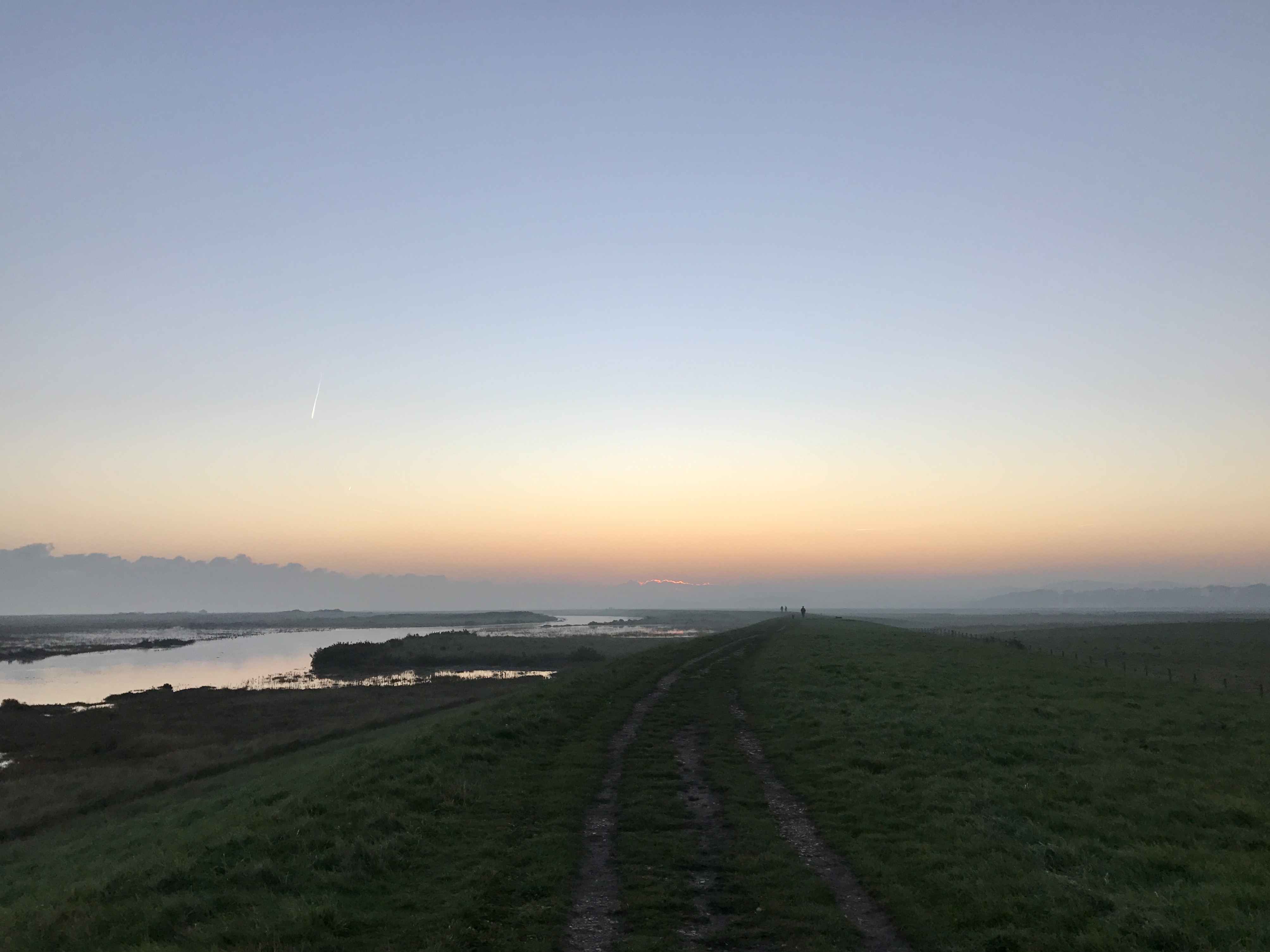
As for the old lady’s cottage, I knew that, too. It was a funny old place, set right off to the west of the village, on a tiny spine of higher ground looking out over the salt marsh. The boys used to cut through that way sometimes to get down to the marsh, back when they were only little. The cottage must have started life as an agricultural building — some sort of feed store. Later on — soon after the last war, or perhaps the one before that — someone had converted it, in a very modest way, into a nondescript, ramshackle, practical family home.
Since, however, the cottage was also remote, visible neither from the coast road nor from the village proper, it further occurred to me that I had no idea what had been going on there over recent months. So this was the secret it had been harbouring: Katy!
“Well,” I said, in order to fill the silence, “there’s something I never expected. You’ve got Beulah Cottage!”
“I’m changing the name, of course,” announced Katy, very quickly.
“Are you? Why? It’s always been Beulah Cottage.”
“Ugh, it’s a horrible name! ‘Beulah’ — what even is a Beulah?”
“It’s from the Bible, Katy.”
“Well, that explains why it sounds so old-fashioned and naff. ‘Beulah’! Bleuuuugh, more like! Who would want to stay in a cottage with a depressing sort of name like that?”
I decided it might be best to change the subject. “So, will it be a holiday cottage, or are you renting it out, or what?”
“Oh no, I’m here full time at the minute. Things didn’t work out with Sam and he ended up with the Battersea flat. And then there was the election. Less said about that, the better! I mean the election, as well as Sam. Anyway, I’m doing that only slightly outdated thing and working from home at the moment.”
“What are you actually doing, if that’s not a rude question?”
“Oh no — it’s a great question!” Behind her over-large sunglasses, slightly redundant on what was a thoroughly overcast day, Katy’s eyes lit up. “I’m a ghost.”
I must have looked a bit blank at this, because she quickly went on to explain that she was ghost-writing memoirs for a reasonably famous if also pretty thoroughly disgraced politician. Having made the requisite polite noises, expressed the conventional desire to meet up properly soon, and said my farewells, I was heading back up the street when, once again, I heard Katy’s distinctive, emphatic, oddly resonant voice calling out behind me.
“Smugglers’ Rest!”
“Sorry?”
“Smugglers’ Rest! That’s the new name for the cottage. Better, isn’t it? Believe me, there’s not much out there that doesn’t benefit from an occasional rebrand!”
* * *
Katy was in the kitchen at the Vicarage, having coffee with us. Or, rather, Katy was having a huge glass of chablis, having agreed readily with Toby’s comment that, although it was only 4 pm here in North Norfolk, the sun was probably over the yard arm somewhere. (“Whatever a yard arm might be” opined Katy, draining most of the big glass with the first avid gulp, leaving a bright smudge of cerise-coloured lipstick at the rim.)
“You do realise” said Toby, who in recent years had learned to put on a rather censorious manner when circumstances required it, “that smugglers were, well, actually quite dark?”
“That’s ridiculous. They were the good guys! What are you, all pro high taxes and big government now? What’s wrong with the outlaws, the rebels, the entrepreneurs? What happened to you two? You both used to be so sound!”
“We grew up, Katy. Some of us were lucky like that.”
“Oh, do piss off.”
I should add, in case it’s not clear, that we were all laughing at this point. We’d reached that age where there’s a strange comfort in spending time with those with whom we’d been on familiar terms all those decades before, even if during all the intervening years we had remained untroubled by the need to renew our acquaintance, if only had at no time really amounted to friendship.
Toby, though, was characteristically determined to make his point, however genially.
“Seriously, though, Katy — people get the wrong idea about smugglers, especially in pretty little holiday villages like this one, and it drives me bonkers. It wasn’t all about that guy from Poldark wandering around shirtless, talking about free trade! Smugglers were a deeply unpleasant lot, most of them — more like a massive protection racket, a paramilitary group even, than what most people imagine. Your smugglers didn’t care much for anyone’s freedom not to have their horses “borrowed” or their sheds commandeered as hiding places. They tortured and murdered all over the place — informers, or even people they thought might possibly be informers. No, they didn’t like people who talked, or argued back, or wanted to go their own way. I really don’t think you’d have got on at all well with them, Katy.”
Katy was now on her second glass of wine and was finding this all hilarious.
“All you’re doing is reminding me that Smuggler’s Rest is a really strong concept. ‘Smugglers’ sounds edgy, sexy, dangerous — but then ‘Rest’ gives it all a holiday vibe. I love it! Wait until you see the house — you’ll see how it all fits.”
“What exactly are you doing with it, anyway? Have you needed to change much?”
“Oh yes, I’ve changed literally everything. It was absolutely hideous before — all of it — old wallpaper, lino floors, pokey little rooms, an outdated fireplace, the works. It’s going to be completely transformed by the time I get done with it. And my builders are amazing!”
Inevitably, we asked who Katy’s builders were — and she told us. Well, from our neighbour who’s a former police officer, I knew all about those builders, including the reasons why they found it so easy to obtain cheap materials, their interesting relationship with a representative sample of the local councillors, even why one of their owners had been banned from the local racecourse for life.
Was it worth telling Katy, though?
She was looking around the Vicarage kitchen — the sagging old beams, the mildly wonky Crittal windows, the children’s art projects thoroughly yellowed with age, the 1950s Aga with its penumbra of snoring senescent animals — with a kind of ill-disguised pity.
“You could do so much with this place, you know — but then I suppose they don’t pay vicars very much these days, do they?” she opined. “Still, it’s amazing, when you think of it, that the church is a going concern at all. I suppose it does some good, here and there, but just think of the value going to waste in all that property — and the church hierarchy all seems incredibly left-wing. Doesn’t that get on your nerves, Toby? Or have you gone totally native now?”
Toby, though, refused to rise to the bait — or at least to rise very far.
He got up from the kitchen table, smiling benevolently at us both. “As much as I’d love to answer that, Katy, I’ve got a PCC meeting in fifteen minutes, and then the bereavement group after that, so that’s a massive row for another evening, yes? Suffice to say that having always been a conservative of one sort or another, I increasingly think that at least some of that should be able conserving what we have — and a lot of that is about stewardship, rather than value or profit maximisation or whatever other weird utilitarian nonsense you’re trying to sell at the moment. Now, give me a kiss.”
And so Katy rose, rather awkwardly, and they embraced each other warmly, and promised to see each other again soon.
“A peaceable realm, public order and the rule of law — that’s the way forward, Katy” called Toby as he closed the kitchen door. “Watch out for smugglers!”
And so Katy and I sat laughing at the table, and talked about mutual friends and all the various things that had happened to them, happy or horrid, while I made myself another cup of instant coffee, and Katy finished the bottle of wine.
* * *
Months passed.
One afternoon at the end of October, I finally went round to see the cottage, where the work had only just been completed. Toby was away at a retreat, so this was to be a Girls’ Night In, as Katy marketed it to me, in a WhatsApp message that featured quite a lot of wine-glass type emojis. So it was that I brushed my hair and put on some lipstick, left our teenage sons in charge, and set off for the Smuggler’s Rest.
Katy was right, of course, that the cottage looked amazing — in the strict sense that its appearance truly stimulated amazement, although perhaps not in the way that she had hoped.
The modest, single-story structure with its casual, shabby and time-worn accretion of outbuildings and sheds had been, as Katy had promised, transformed.
Huge expanses of glass now punctuated its surface, giving out across the salt marsh on three sides. Inside the house, various rooms had been bashed together to form a long, low, bracingly impersonal “living space”, complete with a polished concrete floor and gleaming steel kitchen. According to Katy, the effect of this was to create an “industrial look”, although I struggled to imagine the productive industry that could take advantage of this particular environment.
On the stark white walls of the “living space” were enshrined a series of metal-framed photographs, depicting variously an old shed, the bare rotting ribs of an abandoned clinker-built boat, a rusted fuel tank and a scruffy tuft of sea lavender.
“Those are to connect this place to the salt marsh” explained Katy. “I wanted to bring the outside in.”
I looked out towards the marsh — easy to do, as the huge windows meant that the room in which we stood was totally exposed to the grave, wind-swept, somehow sullen vastness beyond. Dusk was falling. Far out on the horizon, a container ship was passing, hauling its anonymous burden from Rotterdam to points further north. “All that trade — I love it!” proclaimed Katy, loyally. She was more silent about the wind farm.
At first, the tiny lights of the wind farm twinkled against a sky swiftly darkening from cerulean to smooth, velvety black. After a little while, though, I couldn’t see them any more. As often happened at this time of year, a mist was coming up from the sea. Moving swiftly, as vaporous and clammy as a phantom, it rushed forward, swallowing up the salt marsh, until after a few minutes there was nothing else to look at.
Still, having lived in the village for years now, I knew very well what the mist was hiding.
For between the sea and the cottage lay the salt marsh — that no mans’s land of ambiguity and danger, boggy ground reeded with silvery creeks, neither earth nor water but rather both at once — ever-changing yet somehow also wholly unalterable — an unreliably ally at the best of times, and at any other time, even worse.
Was that a light down in the marsh? But no, I must have imagined it, or perhaps it was simply the reflection in the glass, because of course the darker the dusk outside, the more it became impossible for us to see out, yet very easy for anyone else to see in. In Katy’s remodelled house there were, of course, no curtains.
Katy stood at the vast, gleaming steel worktop, busying herself with a bottle of chardonnay and an extremely futuristic and probably expensive, if clearly not very effective corkscrew.
I remember that we laughed, companionably, at her incompetence. Eventually, when the long-awaited “pop” finally arrived, echoing around the steel and the glass and the polished surfaces like a pistol-shot, we laughed even more.
Why the hilarity? We were both, I suspect, playing at being students again. For this evening, at least, we were just two girls with a freshly-opened bottle of wine, no adult responsibilities — also no lurking sense of disappointment, awareness of missed opportunities, hints of failure to live up to our early promise. Yes, we were determined to enjoy ourselves that evening, come what may.
We settled down to talk. We sat at opposite ends of a long, sleek, handsome, uncomfortable sofa, upholstered in close-cropped velvet, chalk-white and unblemished. The sofa was positioned, oddly enough, so that one sat with one’s back to the marsh, looking towards the worktop, and then past that, towards the little vestibule that led to the front door. The kitchen island was meant to be the focus — certainly not the marsh.
“So, how’s working from home, then?”
“Incredible!” Katy enthused. “I love it! No more Ubers from Battersea at I-don’t-know-what-o’clock in the morning! I get up, do my yoga, do my mindfulness, do my gratitude, all that shit — and then, next thing, I’m on a Teams call with —” and here Kay named someone who had been reasonably famous not more than four or five years ago — “here on the sofa, wearing pyjama bottoms and flip-flops. How good is that?”
I agreed that it was very good indeed. In truth, though, I was unable to imagine Katy, who for our casual Girl’s Night In was kitted out in a scarlet satin blouse, tight white jeans, gold jewellery, high heels and Instagram-ready makeup, as ever wearing anything as prosaic as normal pyjamas.
Katy continued to opine about her new life here in Norfolk.
“Obviously, there are downsides to living in the backside of nowhere. The Waitrose driver this morning whinged about having to navigate all the way down that ridiculous drive to the cottage — I’m going to have to have it all resurfaced, aren’t I? Well, at least I can get rid of those awful little trees while I’m at it — you know, those ones with all the leaves. Also, the broadband speed is catastrophic. And the mobile reception is worse! How do you live like this? You must feel so out of the loop.”
Her face grew sorrowful as she contemplated how sad my situation must be, until a huge gulp of buttercup-coloured wine boosted her spirits again —not that Katy’s spirits ever needed much boosting.
“It’s not that bad,” I replied. “Here’s a thing. Have you considered meeting some local people? Some of them are perfectly all right, you know. With real people, it doesn’t matter so much that none of us has a reliable mobile signal.”
Katy grimaced. “That’s not going to work. I can’t imagine I’d have much in common with people here, would I? Unless you want to set me up with some extremely rich and handsome son of the lord of the manor, that is. All tweeds and corduroy and, um, all sorts of Purdy gear — whatever that is, I think it might be guns — and maybe a spaniel — but somehow sexy, too. Not too bright, but quite fit. The man, not the spaniel! A Tory, obviously. Also very, very rich, with a big house that I can redecorate, and lots of land for photo-shoots. I think that flies as a concept, doesn’t it?”
“I see what you mean,” I replied. “You’re right, Katy. It’s probably not going to work.”
“Don’t worry! I’m fine not knowing anyone. Truly! The thing is, I get a huge amount done here, with no one around. I’ve made so much progress on the book — it’s incredible. There’s nothing to do but work, get into fights on social media, then binge-watch Netflix and drink wine in the evening. And before you start quoting Roger Scruton at me about communities or whatever it is you’re about to do right now, Roger Scruton actually wrote a book about wine, so this can’t be the worst way to live. I know — Sam gave me a copy of it, Scruton’s book I mean, the Christmas before we split up. I think I still have it here, somewhere. I haven’t unpacked my books yet. There isn’t really a place for them. Or did I burn it? God, my memory is going.”
It was totally dark outside, now. The effect of this was that the windows encircling us on three sides acted like mirrors, as indeed, with a woozy lack of clarity, did the stainless steel kitchen island.
So it was that I was left contemplating multiple alternate versions of Katy, seen from several angles, like that portrait of Charles I that Van Dyck did for Bernini, but obviously with more lipstick, bleached hair and blood-red satin.
Did Katy, for once, genuinely look a bit dejected? The uproarious mood of a few minutes before, when everything was hilarious, had somehow deserted us. Yet nothing in our previous relationship had equipped me with the insights, the intuitions I needed in order to know how to console her. A short silence ensued.
I need not have worried, though, as, whatever her other flaws might have been, Katy was not one for self-pity.
“Hey, I know what I forgot!” Up she bounced. She skipped over to the kitchen area, opened a cupboard or two, then took something out of the oven.
Soon Katy returned, carrying a glass bowl. It was filled to the brim with garish, ironic Halloween-themed sweets: candy shaped like bats, eyeballs, pumpkins, skulls, spiders and other things that were either manufacturing mistakes, or possibly just too horrific to contemplate.
“Aren’t these repulsive? I saw them in the Coop and I couldn’t resist. Don’t worry, you’re having proper fish pie for actual dinner. Well, a Waitrose fish pie, but that’s better than I could do myself, and anyway, who has time to cook a fish?”
She popped an eyeball into her mouth, while, rather gingerly, I selected a bat and chewed off one of its wings. It tasted of nothing at all.
Still, I suppose it was good that she had made the effort. I went on to describe my own Halloween preparations.
“Well, I carved a jack-o-lantern this morning, and bought industrial quantities of mini chocolate bars — most of which normally end up being eaten by Toby, by the way — but other than that, I admit I left Halloween to the boys. They’ll enjoy jumping out and terrifying the little ones from church! Anyway, I expect all of that will be well and truly over by the time I’m home tonight.”
“Do you do Halloween here? Interesting. I didn’t bother with any of it — other than these, of course.” Here Katy picked up something that looked like a tiny sugar-coated brain, regarded it briefly, and then put it back into the bowl. “Literally no one is ever going to come all the way down that terrible drive on the off-chance of being given a few sweets. Bah humbug.”
It was at this point that we both heard a quiet, but all the same very distinct flurry of knocks at the main door.
“Oh my god,” exclaimed Katy. “Who on earth is that?”
“Could it be DPD? Or Amazon? They often turn up after dark at this time of year.”
“I’m not expecting anything.”
“Could it be someone calling round?”
“We’ve been through that! I don’t know anyone.” This was the irritable version of Katy, well known to anyone who had ever seen her operating in a professional context. It wouldn’t have mattered, really, except that it demonstrated to me in an instant that she was genuinely rattled.
There were yet more knocks.
“Well, Katy, are you going to answer it?”
“I don’t know. Who could it be? Let’s just ignore it.”
“Katy! Do you want me to answer the door for you?” Without thinking, I stood up, and started to make my way towards the front door. But as I did, we could both hear it opening — and then we heard voices, and the door being closed again, but with whoever it was still in the building.
Three men entered the large and over-lit “living space”, all together.
The first was old, although still quite strong and broad in the chest. His long beard was stained with tobacco, the remnants of previous dinners and much else. His clothes were dank and greasy. I had certainly not seen him in the village before.
The second, a bit younger, was missing one eye, one ear and part of his lower lip, in consequence of which dribble spilled from his mouth onto his smock, and when he tried to speak he made a terrible slurring sounds.
It was at that point that it became clear to me that whatever this was, it was no Halloween prank.
As for the third man, he was a different proposition altogether — young, muscular and very handsome, with skin the colour of dark honey, an easy smile and disconcertingly pale blue eyes. He moved with a confident, swaggering air, as if he was very much accustomed to doing exactly what he liked, even in other people’s houses, with other people’s things.
The men were all strangely dressed — in dull rags and tatters, enlivened here and there with a bright canary-coloured scarf, a cap with silver braid along the edge, a single gold earring. All carried real knives. At least one had what seemed to be an old-fashioned pistol, tucked into the greasy waistband of his strangely-made trousers. Finally, they brought with them a pair of lanterns, with they treated with great care.
The young man pushed past the other two and stood in front of us, smiling. When he spoke, his accent had something foreign about it. Were they slightly French, those inflexions — or simply not of the present day?
“Begging your pardon, fine ladies,” he began, “it is not our intention, is it my brave boys, to intrude too much upon your hospitality, but — and you will, I have no doubt, appreciate our temporary difficulty, it being quite unavoidable in these hard times, what with the tyrannical impositions of the government, all rogues, one and all, so that a man can hardly earn an honest crust without some revenue officer coming down upon him without mercy or reason — we are, in brief, in need of momentary refuge, perhaps a little sustenance and company too, are we not, my brave boys? And what very fine ladies you are, too —”
And with this, he stepped forward and, with a slim dark hand, reached out to caress the sleeve of Katy’s scarlet silk blouse.
Katy started away, throwing up her own hands in front of her, then clasping them tightly across her chest, as if to protect herself.
“Go away,” she gasped, breathless with sheer indignation. “This is private property. I’m calling the police!”
She looked around for her iPhone, which I think she hoped she had brought along to the sofa. She had, however, left it on the kitchen island, against which the one-eyed man was now leaning.
He was examining curiously everything that was lying there — including not only the iPhone and MacBook Air, but also a corkscrew, a bowl of olives, her key fob, a tube of MAC lipstick and, presumably to add an air of whimsy, a selection of novelty mugs left over from various political campaigns of the past decade. What Katy might not have realised, of course, was that even if she had rung the police, they probably wouldn’t have reached us for half an hour at the very best.
“Hey, don’t touch that!”
The one-eyed man had picked up Katy’s MacBook. He seemed transfixed by the shiny surface. He did not, however, appear to understand how to open it. In fumbling with it — he might, with hindsight, have been missing a few of his fingers, too — he dropped it onto the floor, so that it went bouncing off towards the edge of the room. This amused the men.
Katy, however, was now furious. “What on earth is your problem? Who are you? You can’t just come in here and destroy all my things. Is this some kind of stupid Halloween joke? Because if it is, it’s not exactly funny. I really am going to ring the police.”
But as she stepped towards the kitchen island, the young man, smiling luxuriantly at her, made as if to block her way, his arms outstretched towards her. Again, he just managed to touch the silk of her blouse. She jumped back, but slightly lost her footing on the slippery concrete floor — she was wearing high heels — and half-collapsed, half-fell back onto the sofa.
The young man threw back his gorgeous head and laughed, but it was a terrible, dark, peculiar laugh that carried an unspoken threat behind it.
From here, things deteriorated quickly.
“You will not mind, ladies, if we avail ourselves of some light refreshment, just while we wait for the revenue riders to pass? This is a fine place, this house — so far from the highway, so near to the paths that go up from the marsh — I wonder, boys, why we never waited here before?”
This was the older man, who, unlike his young colleague, spoke in the cadences of North Norfolk.
The one-eyed man made his usual slurring roaring sound. Clearly more a man of action than of words, he was going around the kitchen, opening cupboards. Little he found there seemed to suit his requirements. Eventually, however, he got as far as prising open the door of the refrigerator, although the way in which he did so — using one of Katy’s expensive Japanese kitchen knives — suggested no great familiarity with modern kitchen equipment.
The contents of the refrigerator, though, clearly appealed to the men — as did the very full rack of wine bottles that was built into the stainless steel kitchen island. The frustration here was that the men did not seem to understand how modern corks work. Their answer to this puzzle — resourceful, but messy — was to break the tops off the bottles, smashing them against the stainless steel worktop. They then poured the contents into Katy’s novelty campaign mugs — not with any great care, although in fairness to them, there were so many bottles to share between the three of them that this perhaps did not seem to matter very much.
The young man, however, had also seized from the kitchen island the bottle of chardonnay that Katy had opened earlier the evening. He lifted it to his lips and drained it at one long draught, before flinging the spent bottle away then laughing as it smashed against the concrete floor, littering the polished surface with yet more broken glass.
The older man was helping himself to the fish pie, eating it right from the serving dish with his hands. The one-eyed man simply stared at us fixedly, with an expression I found difficult to read.
The room had taken on a smell of wet clothing, fish, the sea, wine and stale human sweat.
Katy, for her part, was still on the sofa, sitting very still, looking at her hands. The entire situation was so far from her frame of reference that it was as if she had simply shut down, simply ceased to function.
It was difficult to know what to do — and yet it was clearly impossible to go on like this.
I emerged from the corner where I’d been cowering, and stepped towards the kitchen island.
The men paused, briefly, in their revels. They looked at me, without much curiosity or interest. The handsome young man, in particular, who had apparently grown bored of sorting through Kay’s spice rack and her selection of fibre-rich breakfast cereals, adopted a facetious expression.
“Does my fine lady have aught to say to her guests? Will she, perchance, sing us some merry air? Will she dance for us? I think the fine ladies ought to dance!”
This occasioned yet more hilarity amongst the men, who had now taken to entertaining themselves by emptying all the miscellaneous contents of the refrigerator and the cupboards onto the concrete floor, smashing with particular brio those that in some way displeased them.
“Dance, fine lady, dance! Will the fine lady not dance?”
“She certainly will not.” I held my nerve. Putting on my most censorious, school teacher manner, I stared at them hard — and kept staring, not daring to look away.
“Listen to me, all of you. I am the rector’s wife.”
The men, needless to say, expressed great merriment about this, as they seemed to do about most things. All the same, they had heard what I had said. Perhaps I was imagining it, but it seemed as if there was, all of a sudden, something perhaps a little tinny and hollow in their uproarious, profane laughter — as if they were, somehow, just a little less sure of the ground on which they stood.
“I am the rector’s wife, and I am telling you, here and now, that you have no business in Beulah Cottage.”
Something very odd happened at that point. I hardly know how to explain it, really. It was almost as if the whole scene around us —the whole ghastly ordeal that Katy and I were experiencing — somehow flickered.
This effect only lasted for a second or two, if that, but for some reason it gave me a degree of confidence. So I continued.
“What on earth are you doing here, in Beulah Cottage? You’re local lads. You know very well whose place this is, don’t you?”
“Indeed, madam, we know very well who keeps this generous and hospitable house, do we not, my brave boys?” This was the young man.
And the older man answered him, “Aye, indeed we do, boy! Tis the other one — the pretty one!” All of them, even the one-eyed one, turned their gaze to Katy, who was now cowering in a corner of the sofa, her face in her hands, curled almost into a little ball, willing them all to go away. “Aye, very pretty she is, too!”
I persisted.
“The Pretty One, as you call her, is, I’ll have you know, old Dot Anscombe’s niece.”
At this, there was an audible intake of breath — and then a kind of collective groan.
“Oh yes!” I continued. “You remember old Dot Anscombe, of Beulah Cottage, do you not? Now, she was a good church-going woman, a decent and law-abiding woman — not the sort who would welcome such as you at her table, as you very well know. Well, the table may look different now — the cottage may look difference — but scratch the surface, and it’s still old Dot’s place — still Beulah Cottage. And you’re still not welcome here. It’s time for you to leave. Now.”
The men had fallen silent, and were looking at one another, shiftily, as if uncertain as to what they should do next. I continued to glare at them, hands on hips, trying not to show any weakness. As I did so, there was another of those strange flickering interludes, during which the over-lit room seemed to shimmer and flare.
“You remember old Dot Anscombe. I know you do. You’d really better leave right now.”
And then, in that moment, I thought of old Dot. There was time, as I waited for the men to react, in which to ask myself a number of questions.
Had Katy ever known Dot — that gentle, wise old woman? Had Dot really known her own loud, chaotic, brash, extravagantly opinionated niece?
And yet there was, surely, now I thought of it, a sort of a bond between them, a noticeable family resemblance, if only in the energy and persistence with which they pursued the things about which they cared most deeply, no matter how wrong-headed or otherwise these might be — quite a Norfolk quality, when one came to think of it, as if many long generations of these women had been toughened by centuries of struggle against the high tides, the floods, the ineluctable wildness of the sea.
“If you do not go now,” I said meaningfully, “I shall sing a hymn.”
Katy curled up more closely, her head hidden in her arms, and whimpered.
The older man poured himself another mug of red wine, lifted it, and drained it to the dregs. He then threw it to the ground where it smashed, joining the general mess of food, drink and broken kitchenware that had accumulated there.
“Come along, lads,” he said to the others. “We’ve had all that’s worth having here. There’s no fun in those two miserable old things, that’s for sure! If we go now, we can get down to the creek and round to Morston before the tide’s out.”
The one-eyed man roared something incomprehensible yet somehow also clearly obscene. This made the other two men howl with laughter. Yet even as they did so, they were starting to move away from the worktop, leaving the room.
Still, before they left, there was to be one more minor outrage. The young man had been holding a tub of taramasalata. He opened it, sniffed it doubtfully, then flung it to the floor and then kicked it away from him, so that it slid towards Katy’s pristine white sofa and exploded over the surface, leaving a lurid, stinking pink smear like some sort of festering wound.
But that was the end of it. As he reached the vestibule that led to the outer door, the young man turned. He bowed, elaborately, in our direction.
“Goodnight, sweet ladies,” he said. “We thank you for your hospitality. Do not think too badly of us, for the kind of commerce we do has perhaps not nurtured in us the finest fruits of genteel deportment, and the sea is a rough place, and the fruits of free trade not a little scented with the savour of the gallows, which can turn a man desperate and wild, even discourteous! So goodnight, sweet ladies. Goodnight. We shall not, I think, see you again.”
And with that, the men exited the room, and then the house. This time, they left the door open behind them, so that it let in a little trail of the mist that by now was beginning to roll back, first slowly then all at once, towards the roaring vast waste of the sea.
* * *
“Are you sure you don’t want Toby to come round and bless the house for you? He’s done that a few times, you know, for people around here. He did it for Mrs Wigglesworth after that unfortunate incident with the spectral devil dog. She thought it helped.”
“It’s not some huge mystical thing,” I added, as Katy remained strangely silent. “He’d go round the different rooms with you and flick holy water around with a bit of rosemary, and say a few prayers. It sort of clears the air. Think of it as a spiritual rebrand, if that makes it easier for you.”
A moment passed in which, I swear, Katy seemed to be considering this option.
But then she thought better of it. “Thanks but no thanks,” she replied very firmly, shaking her head.
“Fair enough, I said.
It seemed almost as if there was something else she wanted to say, but she couldn’t quite frame it, and so the moment passed.
Instead, as if by way of conciliation, she added “I’m changing the name of the cottage, of course.”
“Excellent! So it’s back to Beulah Cottage, then, is it?”
“No! Who on earth would want to stay in a place called Beulah Cottage? Bleuuggh! No, I was thinking that we could call it Marsh Sprite — you know, ‘Marsh’ for a nice, natural, coastal vibe, and ‘Sprite’ for a bit of spirit, a bit ‘sprightly’, to give it a bit of life? That can’t hurt, can it? What do you think?”
 News from Norfolk